Introduction
Ice cream after tooth extraction is often recommended as a comforting treat during recovery. Many dentists suggest cold foods after oral surgery because they can help soothe pain, reduce swelling, and provide easy nutrition when chewing is uncomfortable. However, despite its reputation as a recovery-friendly food, ice cream can have both benefits and potential drawbacks depending on how and when it is consumed.
After a tooth is removed, the body begins an important healing process. A blood clot forms inside the extraction socket to protect exposed bone and nerves while new tissue develops. Maintaining this clot is essential because any disturbance may lead to complications such as dry socket.
Cold therapy—through foods like ice cream—can support early recovery by reducing inflammation and temporarily numbing sensitive tissues. At the same time, certain types of ice cream contain high sugar levels, mix-ins, or hard ingredients that may irritate the healing site.
Understanding the role of ice cream after tooth extraction helps patients make safe choices while still enjoying some comfort during recovery.
This detailed guide explores the benefits of cold foods, the potential risks of ice cream, the safest types to eat, and how to use cold therapy effectively after dental extraction.
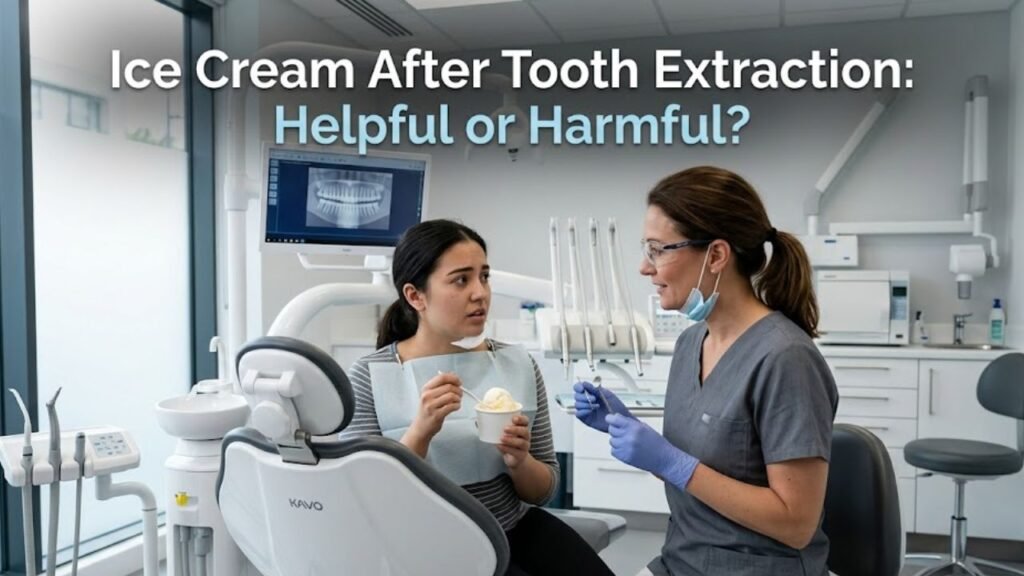
Why Cold Therapy Helps After Tooth Extraction
Cold therapy is widely used in dentistry to control swelling and discomfort after oral procedures.
When tissues are injured during surgery, inflammation occurs as the body begins repairing itself. Cold temperatures can slow blood flow and reduce inflammation around the affected area.
Benefits of Cold Therapy
Cold therapy after tooth extraction helps:
- Reduce swelling in surrounding gum tissue
- Numb nerve endings and relieve pain
- Limit bleeding by constricting blood vessels
- Provide temporary comfort during recovery
Because ice cream is both cold and soft, it can serve as a gentle form of cold therapy.
This is one reason dentists sometimes mention ice cream after tooth extraction as a potential recovery food.
What Happens After a Tooth Extraction
Understanding the healing process helps explain why food choices matter.
After a tooth is removed, the body initiates several stages of healing.
Stage 1: Blood Clot Formation
A blood clot fills the empty socket to protect the area.
Stage 2: Inflammation Control
Immune cells begin repairing damaged tissue.
Stage 3: Gum Tissue Regeneration
New soft tissue gradually covers the socket.
Stage 4: Bone Remodeling
Over time, bone forms inside the socket.
During the first few days, the extraction site is extremely sensitive.
Consuming the wrong foods may disrupt the clot or irritate the tissues.
This is why understanding ice cream after tooth extraction requires considering both benefits and risks.
Benefits of Ice Cream After Tooth Extraction
Ice cream offers several advantages during the first stage of recovery.
Cooling Effect
The cold temperature may reduce swelling and soothe irritated gum tissue.
Easy to Eat
Ice cream requires minimal chewing, making it suitable when the mouth feels tender.
Temporary Pain Relief
Cold foods can numb nerve endings, providing temporary comfort.
Hydration Support
Certain ice cream varieties contain milk and water, which contribute to fluid intake.
These benefits make ice cream after tooth extraction appealing for many patients during the first day or two of recovery.
Potential Risks of Eating Ice Cream
Despite its advantages, ice cream is not entirely risk-free after dental surgery.
High Sugar Content
Many ice cream varieties contain large amounts of sugar.
Excess sugar may encourage bacterial growth around the extraction site.
Hard Mix-Ins
Ingredients such as nuts, candy pieces, or cookie chunks may irritate the healing socket.
Extreme Cold Sensitivity
Some patients experience sharp sensitivity when consuming very cold foods.
Dairy Concerns
In rare cases, dairy products may interact with certain antibiotics prescribed after dental surgery.
For these reasons, patients should be mindful when consuming ice cream after tooth extraction.
Best Types of Ice Cream After Tooth Extraction
Not all ice cream is equally suitable during recovery.
Choosing the right type helps minimize irritation.
Recommended Ice Cream Options
Safe options typically include:
- Plain vanilla ice cream
- Smooth frozen yogurt
- Soft-serve ice cream
- Dairy-free smooth sorbet
These options contain fewer hard ingredients and are easier to consume.
Choosing the right variety improves the safety of ice cream after tooth extraction.
Ice Cream Types to Avoid
Some varieties are more likely to cause irritation.
Ice Cream with Hard Add-Ins
Avoid flavors containing:
- Nuts
- Chocolate chips
- Candy pieces
- Cookie chunks
Crunchy Toppings
Toppings such as sprinkles or crushed biscuits may disturb the extraction site.
Extremely Hard Frozen Ice Cream
Ice cream that is too frozen may require chewing pressure.
Avoiding these options helps reduce risks associated with ice cream after tooth extraction.
Timeline: When Ice Cream Is Safe to Eat
Timing plays an important role in determining whether ice cream is beneficial.
Ice Cream Recovery Timeline
| Time After Extraction | Ice Cream Recommendation | Reason |
|---|---|---|
| First 24 hours | Safe in moderation | Cold therapy benefits |
| Days 2–3 | Continue soft varieties | Swelling still present |
| Days 4–5 | Gradually reduce cold foods | Tissue healing improves |
| After 1 week | Normal diet possible | Socket stabilized |
Following this timeline ensures that ice cream after tooth extraction supports healing rather than interfering with it.
How to Eat Ice Cream Safely After Extraction
Consuming ice cream correctly can reduce potential complications.
Let Ice Cream Soften Slightly
Allowing ice cream to soften prevents excessive cold sensitivity.
Eat Slowly
Eating slowly minimizes sudden temperature changes in the mouth.
Avoid the Extraction Side
Chew or swallow on the opposite side of the mouth.
Skip the Straw
Using straws creates suction that may dislodge the blood clot.
These precautions improve safety when enjoying ice cream after tooth extraction.
Other Cold Foods That Help Recovery
Ice cream is not the only option for cold therapy after dental surgery.
Alternative Cold Foods
Patients may also consider:
- Frozen yogurt
- Smooth smoothies
- Chilled applesauce
- Cold mashed bananas
- Soft pudding
These foods provide similar cooling benefits while offering nutritional variety.
Including alternatives alongside ice cream after tooth extraction helps maintain balanced nutrition.
Nutrients That Support Healing
While comfort foods are helpful, healing also requires proper nutrition.
Protein
Protein supports tissue repair.
Examples include:
- Eggs
- Yogurt
- Soft fish
- Tofu
Vitamin C
Vitamin C supports collagen formation.
Sources include:
- Mango
- Papaya
- Soft berries
Zinc
Zinc contributes to wound healing and immune function.
Sources include:
- Whole grains
- Beans
- Dairy products
Combining these nutrients with occasional ice cream after tooth extraction supports recovery.
Signs Ice Cream May Be Causing Problems
Although rare, certain symptoms may indicate irritation from cold foods.
Symptoms to Watch For
Patients should monitor for:
- Increased sensitivity
- Gum irritation near the extraction site
- Pain when consuming cold foods
- Swelling after eating
If these symptoms occur, switch to lukewarm soft foods and contact your dentist if discomfort persists.
Monitoring these signs helps patients safely manage ice cream after tooth extraction.
Practical Tips for Faster Recovery
Diet is only one aspect of healing after dental extraction.
Follow Post-Surgery Instructions
Always follow the instructions provided by your dentist.
Maintain Good Oral Hygiene
Gentle brushing helps prevent bacterial buildup.
Stay Hydrated
Water supports circulation and healing.
Avoid Smoking and Alcohol
These habits may delay recovery.
Combining these practices with careful use of ice cream after tooth extraction promotes smoother healing.
FAQs
Is ice cream good after tooth extraction?
Yes, ice cream can help reduce swelling and soothe discomfort during early recovery.
How soon can I eat ice cream after extraction?
Most patients can eat ice cream within the first day after surgery.
What type of ice cream is best after extraction?
Plain, smooth ice cream without nuts or candy pieces is usually safest.
Can ice cream cause dry socket?
Ice cream itself does not cause dry socket, but using a straw while drinking milkshakes can increase risk.
How much ice cream should I eat after extraction?
Moderation is important. Ice cream should be part of a balanced recovery diet rather than the main food source.
Conclusion
Ice cream after tooth extraction can be both helpful and safe when consumed properly. The cooling effect provides temporary pain relief, reduces swelling, and offers an easy-to-eat option during the early stages of recovery.
However, patients should choose smooth varieties without hard ingredients and avoid excessive sugar or extremely cold temperatures. Proper timing, portion control, and careful eating habits help ensure that ice cream supports healing rather than interfering with it.
Cold therapy, combined with soft foods, proper hydration, and good oral hygiene, can significantly improve comfort during recovery.
By understanding how ice cream after tooth extraction affects the healing process, patients can enjoy a soothing treat while protecting their oral health and promoting faster recovery.
Find Your Perfect Dentist
Easily book appointments with top-rated dentists in your area
Need Emergency Dental Care?
Get immediate help from verified dental professionals