Gold Dental Crown vs Titanium Crown is a common comparison in restorative dentistry, particularly for patients seeking durable and long-lasting solutions for damaged or decayed teeth. Both materials are widely used in dental treatments because they offer excellent strength, resistance to corrosion, and biocompatibility. However, they differ significantly in material composition, aesthetics, durability, and clinical applications.
Dental crowns are protective caps placed over damaged teeth to restore function, prevent further tooth decay, and support long-term oral health. The material chosen for the crown can affect everything from bite strength and longevity to gum health and overall appearance.
This comprehensive guide explains the Gold Dental Crown vs Titanium Crown debate in detail. We will explore the material science behind each option, compare durability, discuss preventive dental care considerations, and help patients understand which crown type may be most suitable for their dental needs.
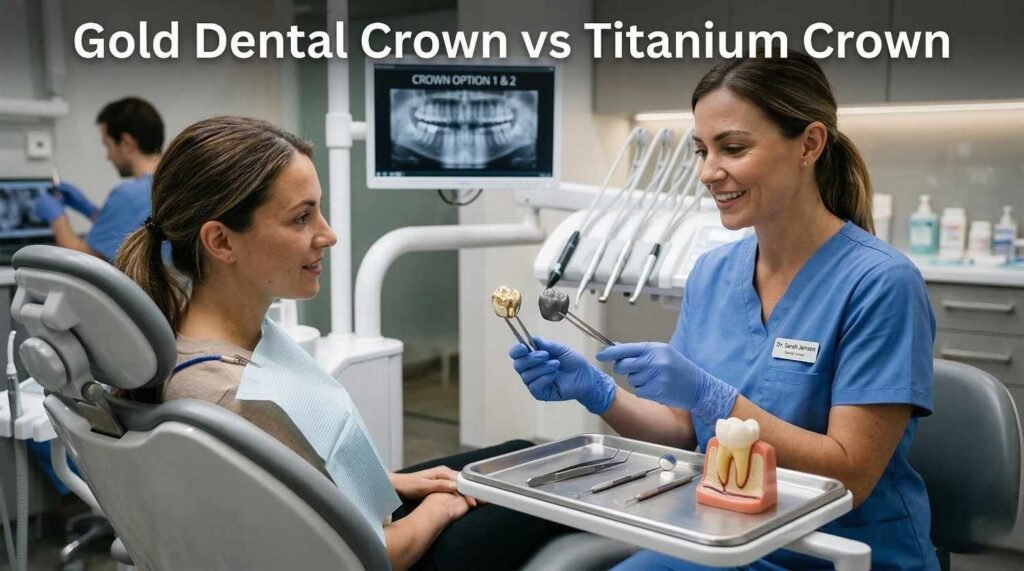
Understanding Dental Crowns in Modern Dentistry
Dental crowns are commonly used in restorative and cosmetic dentistry to repair teeth affected by damage, fractures, or severe cavities.
When Dentists Recommend Dental Crowns
A dentist may recommend a crown for several reasons:
- Protecting a tooth after root canal therapy
- Restoring a tooth with extensive cavity treatment
- Strengthening cracked or weakened teeth
- Covering dental implants
- Improving aesthetics in cosmetic dentistry
- Restoring teeth damaged by oral bacteria or infections
Crowns also help prevent further complications such as gum disease, plaque accumulation, and enamel erosion.
Choosing the right material—such as gold or titanium—can significantly impact the success of the restoration.
What Is a Gold Dental Crown?
This YouTube video below explains gold dental crowns and the materials used to make them. It discusses the composition of dental gold and why it is commonly used for its strength, durability, and biocompatibility in restorative dentistry. The video also provides insight into how gold crowns function as long-lasting dental restorations. 🦷✨
Gold crowns are made from a gold alloy combined with metals such as palladium, platinum, or silver to improve strength and durability.
Gold has been used in dentistry for centuries due to its exceptional biocompatibility and resistance to corrosion.
Advantages of Gold Dental Crowns
Gold crowns provide several benefits for patients seeking long-lasting restorations.
- Extremely durable and resistant to fracture
- Gentle on opposing teeth, preventing enamel wear
- Excellent marginal fit that reduces risk of tooth decay
- Long lifespan, often lasting 20–30 years or more
- Rarely causes allergic reactions
Because of these advantages, gold crowns are often recommended for molars and posterior teeth, where chewing pressure is highest.
Limitations of Gold Crowns
Despite their durability, gold crowns have some disadvantages:
- Metallic appearance may not suit visible teeth
- Higher material cost compared to some alternatives
- Not ideal for patients prioritizing aesthetic smile restoration
However, from a purely functional perspective, gold crowns remain one of the most reliable materials in restorative dentistry.
What Is a Titanium Dental Crown?
Titanium crowns are less common than gold or ceramic crowns but are sometimes used in specific dental restorations.
Titanium is widely used in dental implants and orthopedic medical devices due to its exceptional strength and biocompatibility.
Advantages of Titanium Crowns
Titanium crowns offer several unique benefits:
- Very strong and lightweight
- Highly resistant to corrosion and wear
- Excellent biocompatibility with bone and gum tissue
- Often used in implant-supported crowns
- Resistant to oral bacteria buildup
Titanium is particularly useful in implant dentistry because it integrates well with bone tissue, supporting long-term oral stability.
Limitations of Titanium Crowns
Despite their strength, titanium crowns also have drawbacks:
- Metallic gray appearance
- Less aesthetic than ceramic or zirconia crowns
- Limited use in traditional crown restorations
- May require porcelain layering for cosmetic improvement
Titanium crowns are therefore more common in implant-supported prosthetics rather than visible tooth restorations.
This YouTube video below explains the process of placing a crown on a prepared titanium dental implant. It demonstrates how the crown is positioned and secured to restore the function and appearance of a missing tooth. The video also highlights key steps involved in implant-supported crown placement. 🦷✨
Gold Dental Crown vs Titanium Crown: Material Science Comparison
Understanding the physical and chemical properties of both materials helps clarify the Gold Dental Crown vs Titanium Crown comparison.
| Property | Gold Crown | Titanium Crown |
|---|---|---|
| Composition | Gold alloy with platinum or palladium | Pure titanium or titanium alloy |
| Strength | High durability and flexibility | Extremely strong and rigid |
| Corrosion Resistance | Excellent | Excellent |
| Biocompatibility | Very high | Very high |
| Weight | Moderate | Lightweight |
| Appearance | Metallic gold | Metallic gray |
Both materials perform exceptionally well in the oral environment, which is constantly exposed to saliva, bacteria, and acidic foods.
Durability and Longevity Comparison
One of the most important considerations in the Gold Dental Crown vs Titanium Crown discussion is long-term durability.
Gold Crown Longevity
Gold crowns are known for their remarkable lifespan.
Benefits include:
- Resistant to cracking or chipping
- Adapt well to chewing pressure
- Maintain structural integrity for decades
With proper oral hygiene and dental checkups, gold crowns can last 20–30 years or longer.
Titanium Crown Longevity
Titanium crowns are also durable, particularly in implant-supported restorations.
Advantages include:
- Exceptional structural strength
- Resistant to corrosion
- Compatible with bone and gum tissue
However, titanium crowns may require porcelain layering for cosmetic purposes, which can introduce additional wear over time.
Aesthetic Differences Between Gold and Titanium Crowns
For many patients, appearance plays a major role in crown selection.
Gold Crown Aesthetics
Gold crowns have a distinctive metallic appearance.
Pros:
- Unique aesthetic for patients who prefer gold teeth
- Smooth surface that resists plaque buildup
Cons:
- Highly visible
- Does not resemble natural tooth enamel
Titanium Crown Aesthetics
Titanium crowns appear gray or metallic.
Pros:
- Can be layered with porcelain for natural appearance
- Often hidden beneath implant crowns
Cons:
- Pure titanium crowns are rarely used for visible teeth
- Requires additional materials for cosmetic dentistry
Patients seeking natural-looking restorations may prefer ceramic or zirconia crowns, which better mimic tooth color.
Strength and Bite Force Resistance
Both materials perform well under chewing pressure.
Gold Crown Strength
Gold crowns are slightly softer than titanium but have excellent flexibility.
Advantages:
- Absorb bite forces
- Reduce risk of cracking
- Protect opposing teeth from excessive wear
Titanium Crown Strength
Titanium crowns are extremely strong and rigid.
Benefits include:
- Excellent structural support
- Ideal for implant-supported restorations
- High resistance to deformation
However, their rigidity may transfer more stress to opposing teeth.
Role in Dental Implants
Titanium is the most widely used material for dental implants.
Why Titanium Is Used for Implants
Titanium has the ability to osseointegrate, meaning it bonds naturally with bone tissue.
Benefits include:
- Strong implant foundation
- Long-term stability
- High success rates in implant dentistry
Gold crowns can be placed on top of implants, but titanium remains the preferred material for the implant fixture itself.
Preventive Dental Care for Crown Longevity
Whether choosing gold or titanium, maintaining good oral health is essential for crown success.
Daily Oral Hygiene Tips
Patients should follow preventive dental care routines such as:
- Brushing twice daily with fluoride toothpaste
- Flossing around crown margins to remove plaque
- Using antibacterial mouthwash
- Avoiding excessive sugary foods
- Maintaining proper dental hygiene habits
Professional Dental Care
Regular dental visits help prevent complications.
Dentists recommend:
- Professional dental cleaning
- Plaque and tartar removal
- Routine dental checkups
- Early treatment of gum disease or infections
Preventive care helps ensure both gold and titanium crowns remain functional for many years.
Cost Comparison
Cost can vary based on location, dentist expertise, and material selection.
| Crown Type | Average Cost | Longevity |
|---|---|---|
| Gold Crown | $800 – $2,500 | 20–30+ years |
| Titanium Crown | $1,000 – $2,800 | 15–25 years |
Insurance coverage may depend on whether the crown is considered medically necessary.
Which Crown Is Better?
The Gold Dental Crown vs Titanium Crown decision depends on several factors.
Gold Crown May Be Better If
- You need a crown for a molar
- You want long-term durability
- You prefer a material that is gentle on opposing teeth
Titanium Crown May Be Better If
- The crown is part of a dental implant
- Structural strength is the main priority
- A porcelain layer will be added for aesthetics
Dentists evaluate factors such as bite force, tooth location, oral hygiene, and patient preferences before recommending the most suitable material.
FAQ
1. Which is stronger: gold crowns or titanium crowns?
Titanium crowns are technically stronger in terms of structural rigidity, but gold crowns are more flexible and resistant to cracking under bite pressure.
2. Are gold crowns safer than titanium crowns?
Both materials are extremely safe and biocompatible. They rarely cause allergic reactions and are widely used in dentistry.
3. Can titanium crowns look like natural teeth?
Yes. Dentists often add porcelain layers to titanium crowns to create a natural tooth appearance.
4. Do gold crowns last longer than titanium crowns?
Gold crowns typically last 20–30 years or more, while titanium crowns can last 15–25 years depending on oral care.
5. Which crown is better for dental implants?
Titanium is usually used for the implant post, while the visible crown may be gold, zirconia, or porcelain depending on the patient’s needs.
Final Thoughts
The Gold Dental Crown vs Titanium Crown comparison highlights two highly durable materials used in modern restorative dentistry. Gold crowns offer unmatched longevity, excellent marginal fit, and gentle interaction with surrounding teeth. Titanium crowns provide exceptional strength and are essential in implant-supported restorations.
Choosing between these materials requires evaluating tooth location, bite pressure, cosmetic preferences, and long-term oral health goals. With proper preventive dental care, professional cleanings, and regular dental checkups, both crown types can provide reliable protection against tooth decay and structural damage.
Consulting with a qualified dentist ensures the most suitable treatment plan for maintaining a healthy smile and optimal oral hygiene for years to come.
Find Your Perfect Dentist
Easily book appointments with top-rated dentists in your area
Need Emergency Dental Care?
Get immediate help from verified dental professionals