Introduction
Avoid straws after oral surgery is one of the most important instructions dentists give patients following procedures such as tooth extraction, wisdom tooth removal, or gum surgery. While sipping through a straw may seem harmless, the suction created during drinking can interfere with the healing process and significantly increase the risk of complications.
The primary concern is a painful condition known as dry socket, which occurs when the protective blood clot at the surgical site becomes dislodged or dissolves too early. This clot is essential for proper healing because it shields the exposed bone and nerve endings while new tissue forms.
When suction pressure is applied—such as when drinking through a straw—the force can pull the clot out of the socket. Without that clot, healing slows down, pain intensifies, and the risk of infection increases.
Understanding how long to avoid straws after oral surgery, why the restriction exists, and what alternatives are safest can make recovery smoother and prevent unnecessary discomfort. This guide explains the healing timeline, risk factors, and dentist-recommended recovery strategies to protect your oral health.
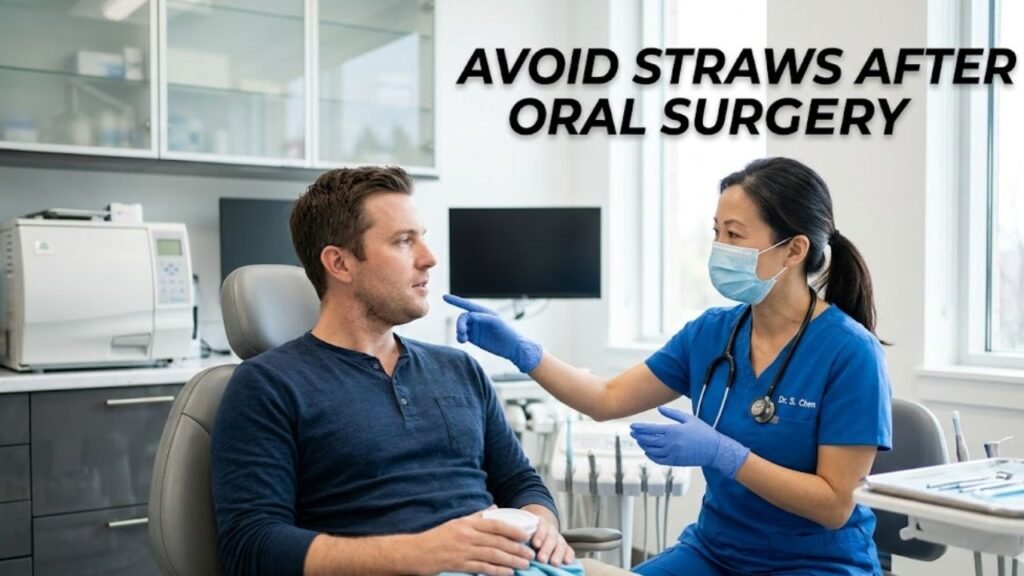
Why Dentists Say to Avoid Straws After Oral Surgery
The instruction to avoid straws after oral surgery is rooted in basic wound-healing science. After a tooth is removed or gum tissue is surgically treated, the body forms a blood clot inside the socket.
This clot acts as a natural bandage.
It protects underlying bone and nerve tissue while allowing new gum tissue and bone to regenerate.
Using a straw creates negative pressure in the mouth. This suction force can loosen the clot or pull it out entirely before the site stabilizes.
The Healing Role of the Blood Clot
Immediately after surgery, the blood clot performs several critical functions:
- Protects exposed bone and nerves
- Prevents bacteria from entering the socket
- Supports early tissue regeneration
- Reduces post-surgical pain and inflammation
When the clot remains undisturbed, healing usually progresses smoothly.
However, losing the clot prematurely often leads to dry socket, which dentists consider one of the most uncomfortable complications following extraction.
What Is Dry Socket?
Dry socket, medically known as alveolar osteitis, occurs when the blood clot either fails to form or becomes dislodged from the extraction site.
Without that protective clot, the underlying bone and nerve endings become exposed to air, food particles, and bacteria.
This exposure triggers severe pain and delays healing.
Symptoms of Dry Socket
Common signs include:
- Intense pain starting 2–4 days after surgery
- Pain radiating toward the ear or jaw
- Visible bone inside the socket
- Bad breath or unpleasant taste
- Swelling around the surgical site
Dry socket is not an infection, but it can increase infection risk if untreated.
Preventing it is one of the main reasons dentists strongly emphasize avoid straws after oral surgery during recovery.
How Long Should You Avoid Straws After Oral Surgery?
Most dental professionals recommend avoiding straws for at least 7–10 days following oral surgery.
However, the exact timeframe depends on the type of procedure and the patient’s healing rate.
Typical Recovery Timeline
| Days After Surgery | Healing Stage | Straw Use Recommendation |
|---|---|---|
| Day 1–2 | Blood clot forming | Strictly avoid straws |
| Day 3–4 | Early tissue repair | Continue avoiding suction |
| Day 5–7 | Gum tissue stabilizing | Still avoid straws |
| Day 7–10 | Clot strengthening | Some dentists allow cautious use |
| After 10 days | Healing progressing | Usually safe if no complications |
Patients recovering from wisdom tooth extraction or complex surgery may need to wait longer.
Your dentist may recommend avoiding straws for up to two weeks if healing appears slow.
Why Suction Is Dangerous After Dental Surgery
Understanding the mechanics of suction helps explain why patients must avoid straws after oral surgery.
When you sip through a straw, the muscles of your mouth and cheeks create negative pressure inside the oral cavity.
This pressure change pulls liquid upward through the straw.
Unfortunately, it also pulls on surrounding tissues.
Effects of Suction on Surgical Sites
Suction can:
- Dislodge the protective blood clot
- Irritate fragile gum tissue
- Trigger bleeding at the surgical site
- Introduce bacteria into the socket
Even a single strong sip can disrupt early healing.
That is why dentists often group several activities together in post-operative instructions:
- No drinking through straws
- No smoking or vaping
- No forceful spitting
- No vigorous mouth rinsing
All of these actions create suction or pressure that may damage the healing socket.
Procedures That Require Avoiding Straws
The advice to avoid straws after oral surgery applies to several dental procedures, not just tooth extraction.
Common Procedures With Straw Restrictions
Tooth Extraction
Removing a tooth leaves an open socket in the jawbone. Protecting the clot is critical during early healing.
Wisdom Tooth Removal
Wisdom teeth surgeries often involve deeper sockets and stitches, making clot protection even more important.
Dental Implant Surgery
Implants require stable bone healing. Excess pressure could interfere with the implant site.
Gum Grafting
Soft tissue grafts are delicate and can detach if suction pressure occurs.
Bone Grafting
New bone material must remain stable while integrating with surrounding bone.
In all these procedures, following instructions to avoid straws after oral surgery supports successful recovery.
Safe Ways to Drink After Oral Surgery
Avoiding straws does not mean you must limit fluid intake. Staying hydrated actually helps the body heal faster.
The key is drinking without suction pressure.
Recommended Drinking Methods
- Sip slowly from a cup or glass
- Tilt the cup gently rather than sucking
- Use small sips instead of large gulps
- Drink room-temperature liquids
Cold liquids can also help reduce swelling during the first 24 hours.
Best Beverages During Recovery
Safe options include:
- Water
- Milk
- Smooth soups
- Oral hydration drinks
- Protein shakes (without straw)
Avoid carbonated drinks during early recovery because bubbles can irritate surgical sites.
Foods and Habits to Avoid With Straws
Straws often accompany certain foods and beverages that may also irritate healing tissue.
If you must avoid straws after oral surgery, it is wise to adjust your diet accordingly.
Foods Often Consumed With Straws
- Milkshakes
- Smoothies
- Iced coffee
- Bubble tea
- Slush drinks
While some of these foods are soft enough for recovery, they should be consumed with a spoon or cup instead.
Additional Habits That Increase Dry Socket Risk
Dentists frequently warn against:
- Smoking
- Vaping
- Chewing tobacco
- Aggressive mouth rinsing
- Spitting frequently
These activities create pressure similar to straw suction and can disrupt healing.
Signs Your Surgical Site Is Healing Properly
Following the rule to avoid straws after oral surgery significantly improves the chances of smooth recovery.
Most patients notice gradual improvement each day.
Normal Healing Signs
Healthy recovery often includes:
- Mild swelling during the first two days
- Slight discomfort that improves daily
- Gradual closing of the socket
- Reduced bleeding after the first 24 hours
Pain should steadily decrease rather than intensify.
If symptoms worsen instead of improving, contact your dentist.
When It Might Be Safe to Use a Straw Again
The safest time to resume straw use depends on your dentist’s evaluation.
Generally, once the blood clot stabilizes and new tissue begins forming over the socket, suction becomes less risky.
Indicators Straw Use May Be Safe
- Minimal pain at the surgical site
- No bleeding or exposed bone
- Gum tissue beginning to close
- Dentist confirms healing progress
Even after clearance, use straws cautiously during the first few attempts.
Gentle sipping reduces unnecessary pressure.
Practical Tips for Faster Oral Surgery Recovery
Patients who carefully follow recovery guidelines often heal more quickly and comfortably.
Below are practical strategies dentists recommend.
Protect the Blood Clot
- Avoid straws and suction
- Do not touch the surgical area
- Avoid vigorous rinsing for 24 hours
Maintain Gentle Oral Hygiene
After the first day:
- Rinse with warm salt water
- Brush teeth carefully around the surgical site
- Avoid electric toothbrush vibration near stitches
Reduce Swelling
Cold compresses applied externally for 15–20 minutes can help reduce inflammation during the first day.
Eat Soft Foods
Soft foods protect healing tissue.
Examples include:
- Yogurt
- Mashed potatoes
- Scrambled eggs
- Oatmeal
- Applesauce
Avoid crunchy foods that could disturb the socket.
Frequently Asked Questions
Why can’t I use a straw after tooth extraction?
Using a straw creates suction pressure that may dislodge the protective blood clot inside the extraction socket.
How many days should I avoid straws after oral surgery?
Most dentists recommend avoiding straws for 7–10 days, although complex procedures may require longer.
Can a single sip cause dry socket?
Yes. Strong suction from even one sip can disturb the clot if healing is still in its early stages.
Are smoothies safe after oral surgery?
Smoothies can be safe if consumed from a cup or with a spoon rather than through a straw.
What happens if the clot comes out?
If the clot dislodges, the socket may become painful and develop dry socket. Contact your dentist if severe pain occurs.
Conclusion
Avoid straws after oral surgery is more than a simple precaution—it is a crucial step in protecting the healing process. The suction created when drinking through a straw can easily dislodge the blood clot that forms after dental procedures, increasing the risk of dry socket and prolonged recovery.
Most dentists advise avoiding straws for at least one week, although complex surgeries may require longer restrictions. During this period, drinking directly from a cup, eating soft foods, and following gentle oral hygiene practices help ensure proper healing.
Patients who carefully follow these instructions typically experience fewer complications and faster recovery.
If you recently underwent oral surgery, treating the surgical site with care—including avoiding straws—can make a significant difference in comfort, healing time, and long-term oral health.
Find Your Perfect Dentist
Easily book appointments with top-rated dentists in your area
Need Emergency Dental Care?
Get immediate help from verified dental professionals